





Under the patronage of His Highness Sheikh Mohamed bin Zayed Al Nahyan, President of the UAE, in his capacity as Ruler of Abu Dhabi

تحت رعاية صاحب السمو ا �شيخ محمد بن زايد آل نهيان ، رئيس الدولة "حفظه الله"، بصفته حاكماً لإمارة أبوظبي

Supported by

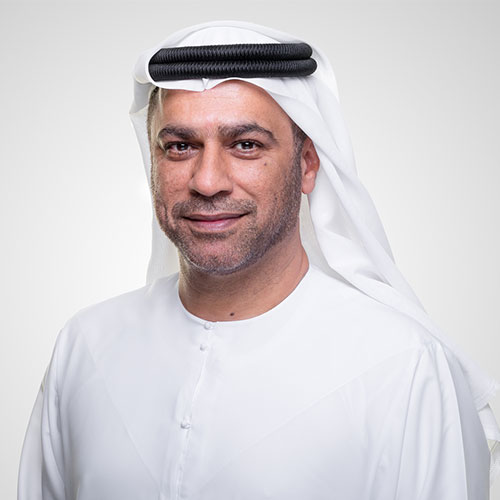
Sultan Albigishi

CEO

ADNOC Refining

Sultan
Sultan

Mr. Sultan Albigishi is the Chief Executive Officer of ADNOC Refining. He has more than 25 years’ extensive downstream experience in refinery operations, project management, planning and strategy and has spent almost his entire career with ADNOC Refining. He joined the organization as a Process Engineer in 1995 before taking on a range of operational and managerial positions in Process Engineering, Production Planning and Economics, Technical Services, Plant Operations, Strategy and Business Support. Before being appointed to his current role, Albigishi was Senior Vice President for Projects and Technical. Prior to this, he oversaw OMV’s refining operations in Austria, Germany, and Romania as Senior Vice President for Asset Development. He also served as a Board Member at ADNOC’s Technical Academy from 2017 to 2020. Albigishi holds a Chemical Engineering degree from Tulsa University in the United States.

Session Overview
Tuesday, 3 November
13:50
Downstream, Chemicals & Industrial Value Chains Plenary Hall B 13:50 - 14:35
Global refining: navigating supply disruption and structural market pressure

Global refining capacity is shifting towards large-scale integrated complexes in the Middle East and Asia, while older facilities in Europe and mature markets close or convert. Supply disruptions in 2026 have exposed dependence on concentrated supply routes, limited spare capacity and crude-slate inflexibility, compressing margins and forcing operational adjustments across refining systems. Managing these conditions requires refiners to make difficult trade-offs between utilisation, feedstock access and product slate strategy in real time. Regional disparities in refining economics are widening, and operators are drawing on inventories and re-optimising configurations to protect margins and maintain stability as disruption moves from episodic to structural. Refiners that build operational flexibility and commercial adaptability into their systems will sustain performance where others face margin deterioration and output constraints.

Attendee Insights:
Understand how refining leaders are managing critical trade-offs to protect margins and sustain market position through prolonged supply disruption.

14:05
Downstream, Chemicals & Industrial Value Chains Plenary Hall B 14:05 - 14:45
Global refining: navigating supply disruption and structural market pressure
Global refining capacity is shifting towards large-scale integrated complexes in the Middle East and Asia, while older facilities in Europe and mature markets close or convert. Supply disruptions in 2026 have exposed dependence on concentrated supply routes, limited spare capacity and crude-slate inflexibility, compressing margins and forcing operational adjustments across refining systems. Managing these conditions requires refiners to make difficult trade-offs between utilisation, feedstock access and product slate strategy in real time. Regional disparities in refining economics are widening, and operators are drawing on inventories and re-optimising configurations to protect margins and maintain stability as disruption moves from episodic to structural. Refiners that build operational flexibility and commercial adaptability into their systems will sustain performance where others face margin deterioration and output constraints.
Attendee Insights:
Understand how refining leaders are managing critical trade-offs to protect margins and sustain market position through prolonged supply disruption.

Member of