







Grids, Infrastructure & Industrial Execution sessions
Reshaping project delivery: how EPC models are evolving for energy at scale
Delivering energy addition at scale requires infrastructure to be built faster than conventional models allow, yet the delivery system is under strain. Transformer lead times now stretch beyond thr......
Learn more
The power demand surge: financing, contracting and building the next 1,100 TWh
Global electricity demand is set to add more than 1,100 TWh in a single year, one of the largest annual increases on record. Industrial expansion across Asia, accelerating transport electrification......
Learn more
The execution advantage: competing in an era of industrial complexity
For decades, competitive advantage in the energy industry was built on access to resources, technologies and capital. Today, a new differentiator is emerging: the ability to execute increasingly co......
Learn more
When infrastructure becomes the frontline: supply diversity, storage and resilience
The effective closure of the Strait of Hormuz in early 2026 removed approximately 20% of global LNG and nearly a fifth of global oil supply within weeks, exposing a system built for efficiency rath......
Learn more
Late life offshore infrastructure: decommissioning and the commercial opportunity to repurpose
Decades of offshore investment have left a global network of platforms, pipelines and subsea systems, much of it approaching end of life. The challenge is no longer simply extending production, but......
Learn more
Built to deliver: infrastructure as the new energy advantage
As the global focus on secure and reliable energy intensifies, the ability to bring new supply to market increasingly depends on the infrastructure behind it. For major energy projects, ambition an......
Learn more
Grid modernisation: the defining constraint on energy growth
Power grids were built for predictability. Today they must deliver flexibility, resilience and scale at once. Across mature markets, ageing infrastructure and record interconnection queues are dela......
Learn more

Build for resilience, not just efficiency
Hear how operators and infrastructure developers are designing energy systems that absorb shocks, maintain supply continuity and perform under pressure.

Close the gap between strategy and delivery
Understand why execution capability is becoming the defining competitive advantage, and how new EPC models, modular construction and digital tools are compressing timelines.

Turn demand into a grid asset
Explore how data centres, industrial facilities and flexible consumers are being repositioned from grid burden to system resource, deferring capital expenditure and unlocking capacity.

Secure the supply chains that underpin everything
Assess how the industry is responding to mineral concentration, equipment bottlenecks and chokepoint risk with localised, diversified and more resilient sourcing strategies.
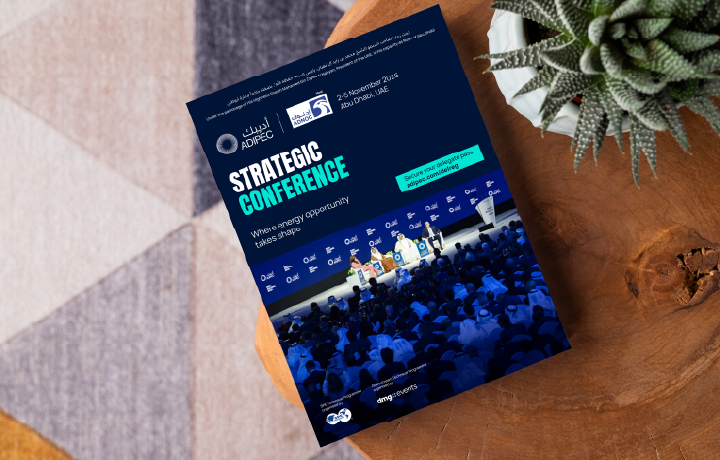
Strategic Conference programme is now live
The ADIPEC Strategic Conference brings together ministers, CEOs, investors, policymakers and technology leaders across 11 programmes to shape the decisions, investments and innovations driving energy security, growth and competitiveness.
Strategic Conference programmes
Energy Security & Resilience
Policy, Regulation & Governance
Finance & Investment
AI, Digital & Technology
Upstream
Natural Gas & LNG
Downstream, Chemicals & Industrial Value Chains
Grids, Infrastructure & Industrial Execution
Clean Power, Molecules & Carbon Management
Maritime & Logistics
Workforce & Skills
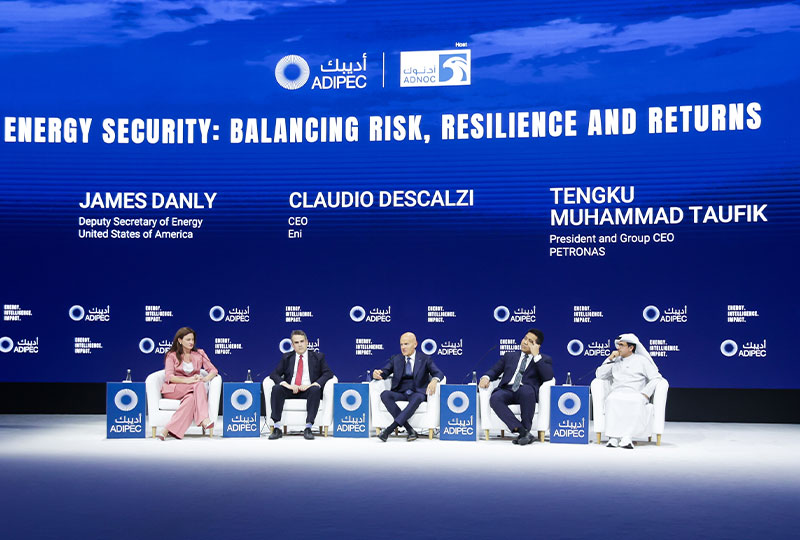
Energy Security & Resilience
Explore how countries and companies are strengthening their ability to withstand disruption while maintaining affordability, reliability and competitiveness.
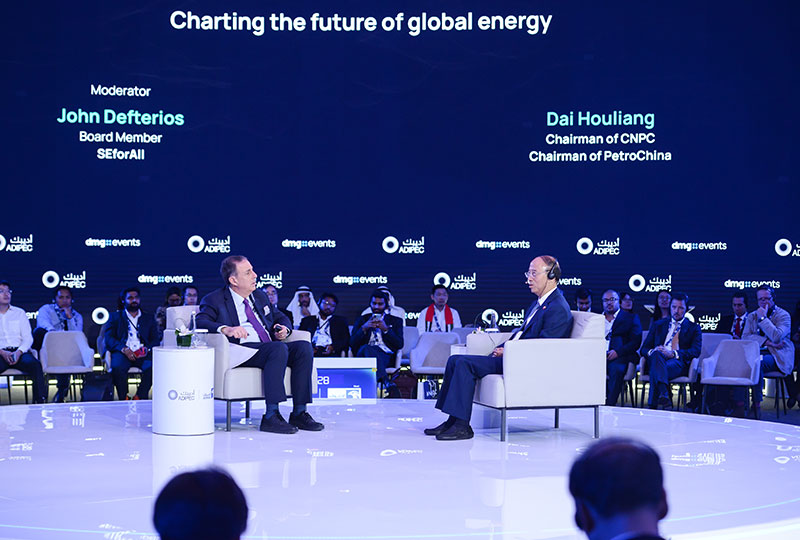
Policy, Regulation & Governance
Understand how policy and regulation can unlock investment, reduce risk and accelerate delivery across energy markets.
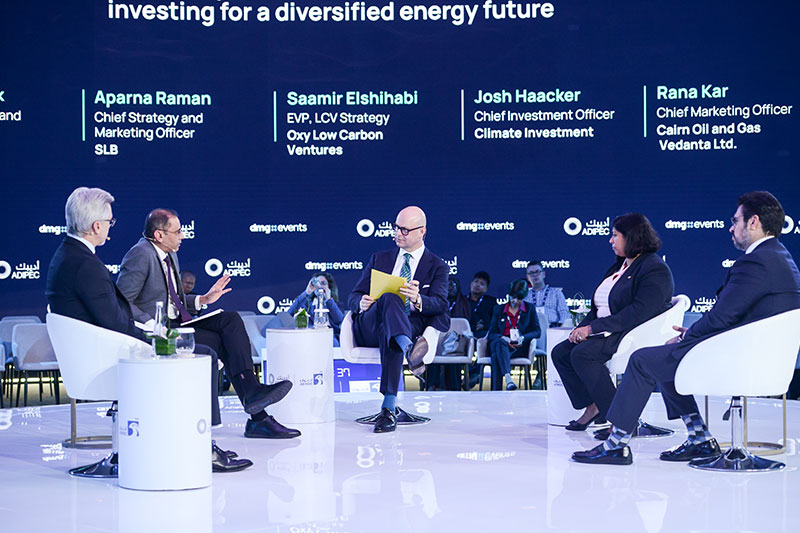
Finance & Investment
Explore how capital can be mobilised to deliver short-term resiliency while securing long-term growth.
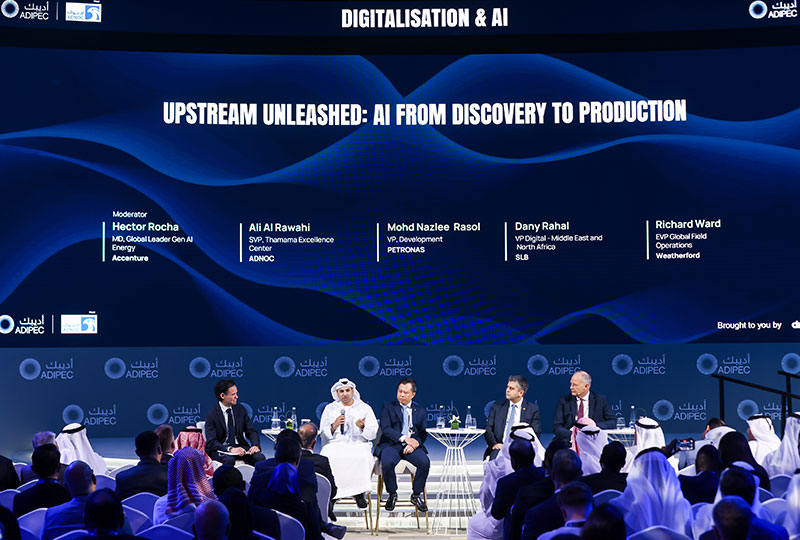
AI, Digital & Technology
Discover how AI and digital technologies are driving efficiency, resilience, security and competitive advantage across energy operations
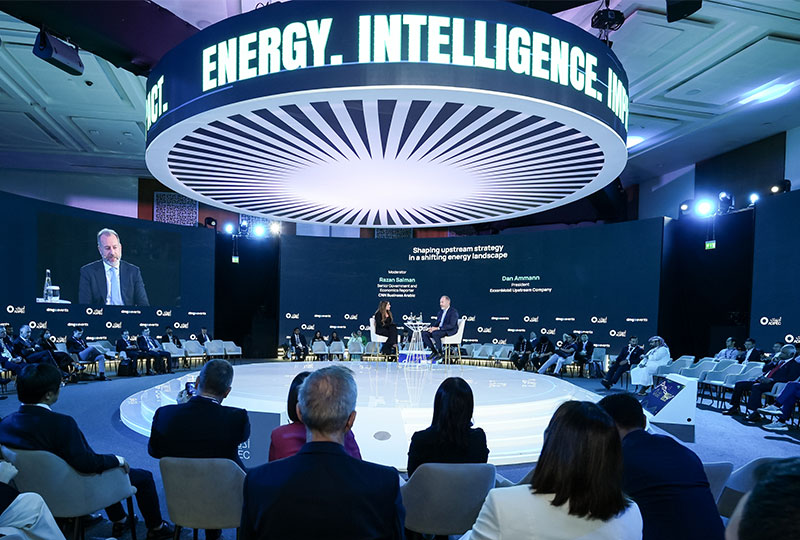
Upstream
Natural Gas & LNG
Delve into how natural gas and LNG markets are adjusting to shifting demand, new buyers and disrupted trade flows.
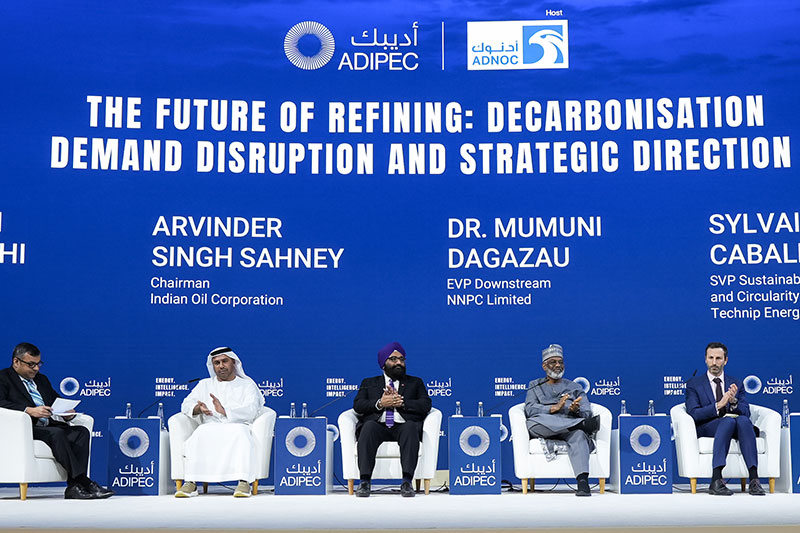
Downstream, Chemicals & Industrial Value Chains
Explore how downstream value chains are competing across markets, securing feedstocks and strengthening integration.
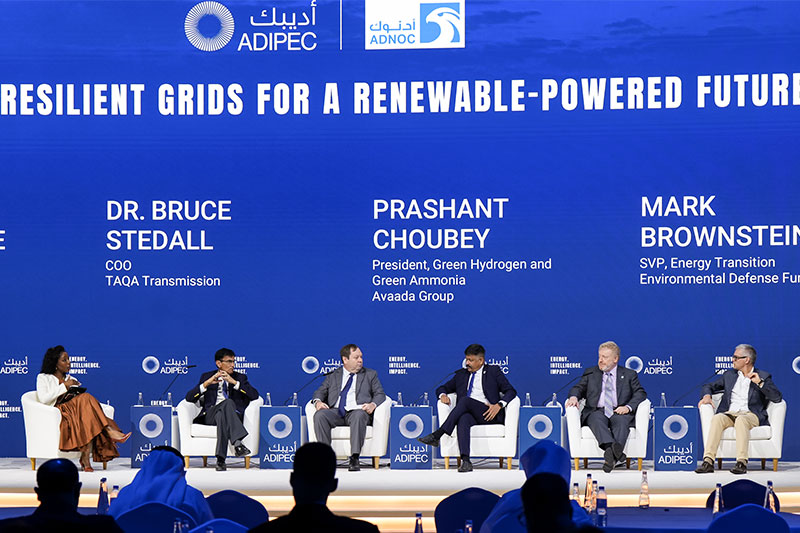
Grids, Infrastructure & Industrial Execution
Understand how grids, infrastructure and execution capacity are becoming decisive to growth, reliability and delivery at scale
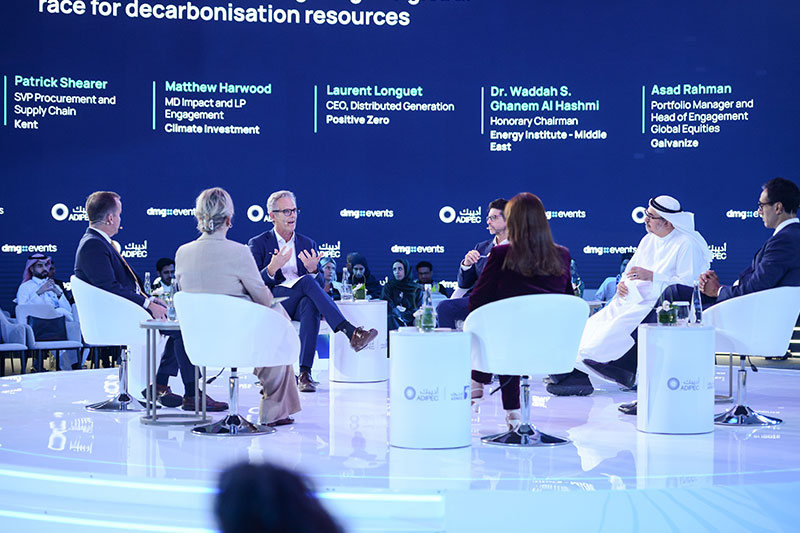
Clean Power, Molecules & Carbon Management
Explore how low-carbon power, cleaner molecules and carbon management are moving into commercially viable delivery at scale
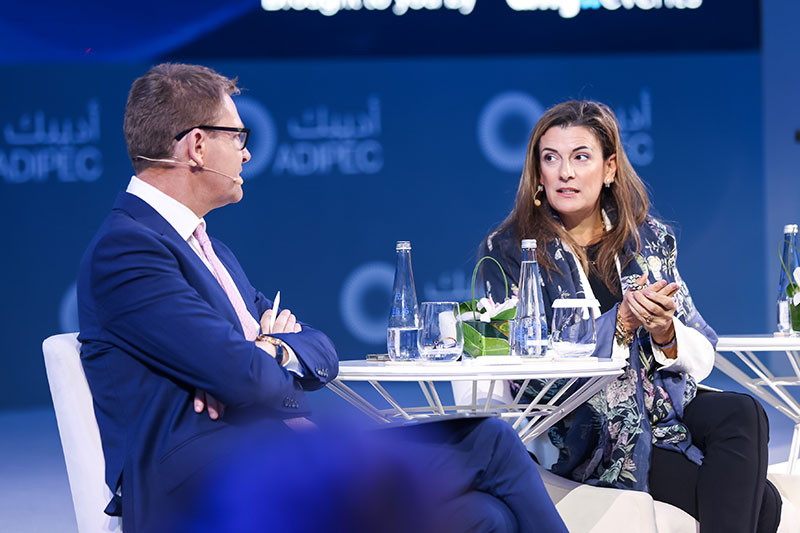
Maritime & Logistics
Discover how shipping, ports and logistics are strengthening trade resilience, route security and infrastructure competitiveness
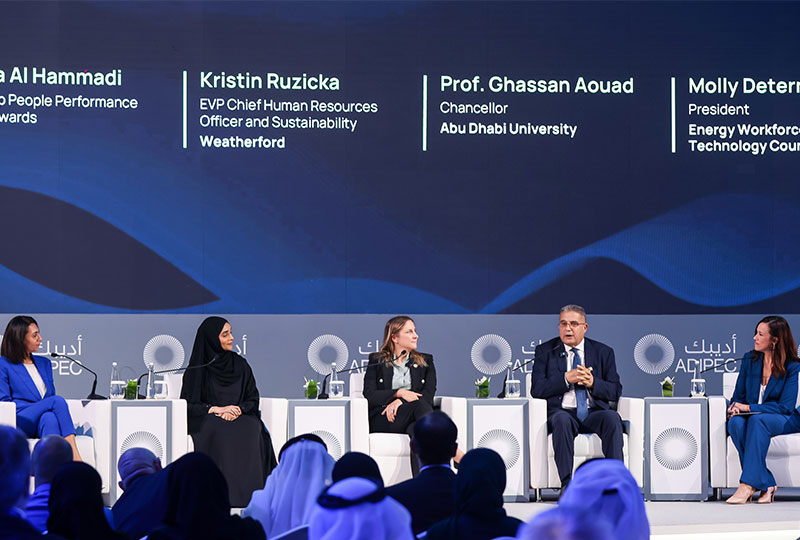
Workforce & Skills
Learn how energy leaders are tackling workforce constraints, critical skills gaps and leadership succession to sustain performance
Frequently asked questions
What is the focus of this programme?
This programme addresses the physical delivery side of the energy system: the grids, pipelines, terminals, storage, supply chains and project delivery models that determine whether energy reaches market reliably and at scale. In an environment where rising demand is colliding with geopolitical disruption and strained delivery capacity, the ability to build, connect and protect infrastructure has become as strategically important as the energy it carries.
Who should attend?
Senior leaders from utilities, grid operators, infrastructure developers, EPC contractors, midstream operators, port and terminal operators, technology providers and investors involved in the planning, financing, construction or operation of energy infrastructure. The programme is designed for decision-makers responsible for capital allocation, project delivery and operational resilience across both conventional and emerging energy systems.
What challenges does the programme address?
Global energy demand is rising at a pace that existing infrastructure was not designed to handle, and recent geopolitical disruption has exposed how quickly systems optimised for efficiency can be overwhelmed. Grids are congested, midstream capacity is falling behind production, equipment lead times have stretched from months to years, and critical energy facilities have come under direct pressure. At the same time, new sources of demand, particularly data centres and industrial electrification, are placing additional strain on networks already operating at capacity. This programme brings together the leaders responsible for solving these challenges: building and modernising grids, closing midstream gaps, accelerating project delivery, securing supply chains and designing infrastructure that performs under pressure.
What topics will be covered?
Sessions span energy resilience and supply diversity, power demand growth, midstream and grid infrastructure, energy storage, demand-side flexibility, offshore infrastructure repurposing, EPC and project delivery models, critical minerals and supply chain strategy, and the protection of critical energy assets, including cybersecurity.
Why is this programme important now?
The events of 2026 have demonstrated that infrastructure resilience is not a future consideration but an immediate operational reality. Energy systems that had invested in diversified supply routes, storage capacity and resilient infrastructure absorbed the disruption; those that had not were exposed. At the same time, structural demand growth shows no sign of slowing, and the ability to deliver new capacity is constrained by equipment shortages, workforce gaps and permitting timelines that have not kept pace. The window between what the energy system needs and what it can currently deliver is widening, and the decisions being taken now on grid investment, project delivery models, supply chain strategy and infrastructure protection will determine whether that gap closes or continues to grow.



