







Clean Power, Molecules & Carbon Management sessions
Activating demand for low-carbon industry: from policy to procurement
The supply side of industrial decarbonisation is advancing: electric arc furnaces, hydrogen-based reduction, carbon capture retrofits and green chemicals projects are progressing. What remains unde......
Learn more
Methane action: the path to lower-intensity production
As scrutiny of energy supply intensifies, methane emissions and routine flaring are becoming important measures of operational quality and production performance. Producers investing in electrifyin......
Learn more
From scale to certainty: delivering energy security around the clock
Electricity demand is accelerating, driven by AI, data centres, advanced manufacturing and growing economies, at a time when energy supplies are increasingly exposed to geopolitical and market disr......
Learn more
Energy diversification as strategic defence: how oil shocks are accelerating the clean energy build-out
Two major shocks in five years have shown that diversification is a security imperative, not just climate policy. Countries that invested in multiple generation sources, strategic reserves and dome......
Learn more
Hydrogen's next chapter: from FID to first molecules
Hydrogen has moved from announcements into execution. Landmark projects across the Gulf, Europe and beyond are approaching production, about to give the industry the most data it has ever had at sc......
Learn more
Nuclear's delivery test: turning commitment into construction
Nuclear has moved from renewed interest to active deployment. Hyperscalers are signing long-term contracts, SMR designs are advancing through regulatory approvals, and governments have reinstated n......
Learn more
CCS: identifying where the economics work and why
CCS remains highly location- and policy-dependent, with costs of USD 100 to USD 250 per tonne of CO₂. Yet a small number of projects are proving the economics can work, each through a different mod......
Learn more
Enabling technologies for a resilient energy system
As energy systems become more complex, resilience will depend not only on how energy is produced, but on the technologies that make it more reliable, efficient and adaptable. Advances in energy sto......
Learn more
The new molecule economy: who controls the next generation of energy trade
Ammonia, methanol, hydrogen derivatives and e-fuels are emerging as a new class of traded energy whose strategic value has increased sharply as conventional flows face chokepoint risk. Export ambit......
Learn more
Building the industries of the future: how energy advantage converts to industrial strength
Regions with structural access to low-cost energy, integrated industrial infrastructure and strategic capital are emerging as natural destinations for the next wave of manufacturing investment. As ......
Learn more

Separate commercially ready from commercially hopeful
Understand which clean electron, nuclear, hydrogen and CCS projects will reach investment decisions and which will not.

Navigate a market shaped by energy security
Explore how successive supply shocks are reshaping the pace, direction and investment case for clean energy deployment.

Assess emerging molecule value chains
Evaluate where margin concentrates in hydrogen, ammonia and CCS, from production through to trade, storage and offtake.

Identify industrial and competitive advantage
Examine how demand activation, border carbon measures and manufacturing policy are reshaping where low-carbon production locates.
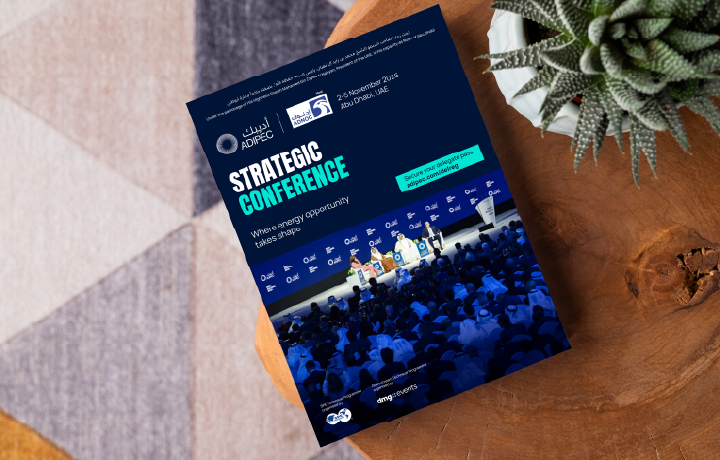
Strategic Conference programme is now live
The ADIPEC Strategic Conference brings together ministers, CEOs, investors, policymakers and technology leaders across 11 programmes to shape the decisions, investments and innovations driving energy security, growth and competitiveness.
Strategic Conference programmes
Energy Security & Resilience
Policy, Regulation & Governance
Finance & Investment
AI, Digital & Technology
Upstream
Natural Gas & LNG
Downstream, Chemicals & Industrial Value Chains
Grids, Infrastructure & Industrial Execution
Clean Power, Molecules & Carbon Management
Maritime & Logistics
Workforce & Skills
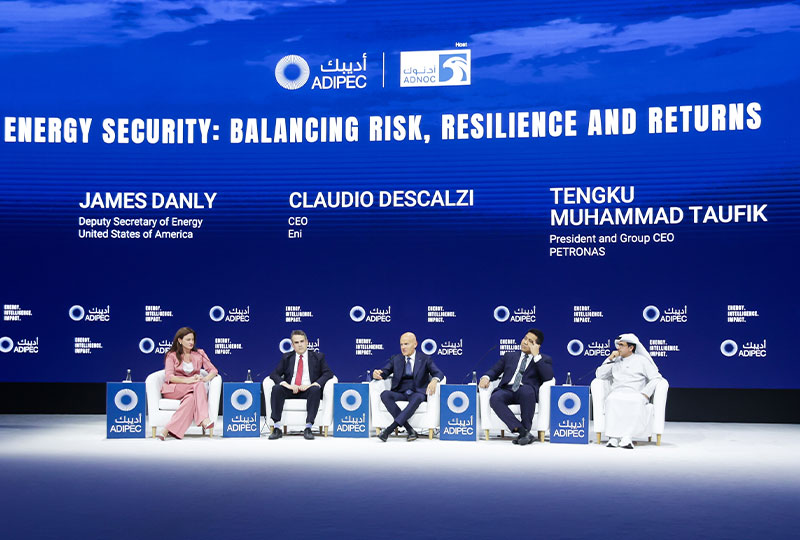
Energy Security & Resilience
Explore how countries and companies are strengthening their ability to withstand disruption while maintaining affordability, reliability and competitiveness.
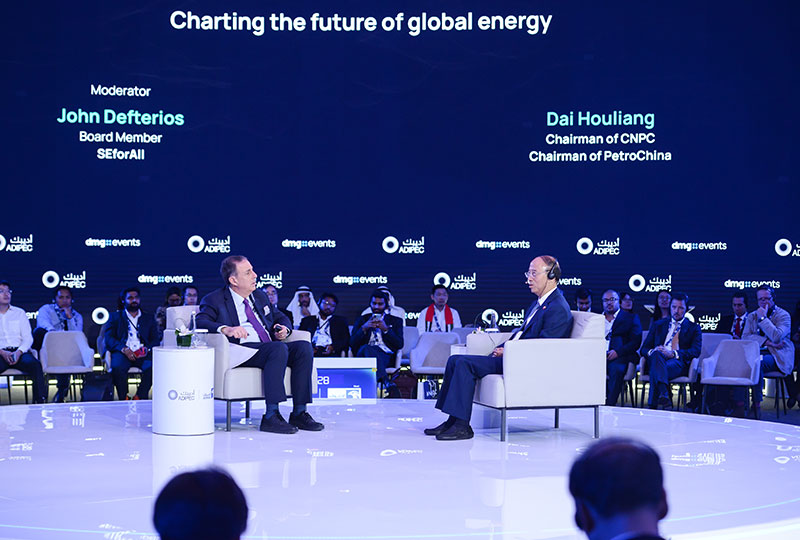
Policy, Regulation & Governance
Understand how policy and regulation can unlock investment, reduce risk and accelerate delivery across energy markets.
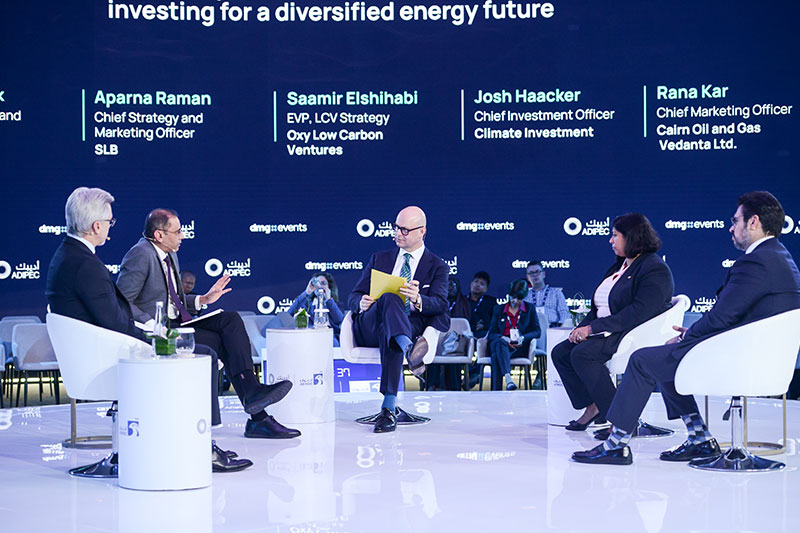
Finance & Investment
Explore how capital can be mobilised to deliver short-term resiliency while securing long-term growth.
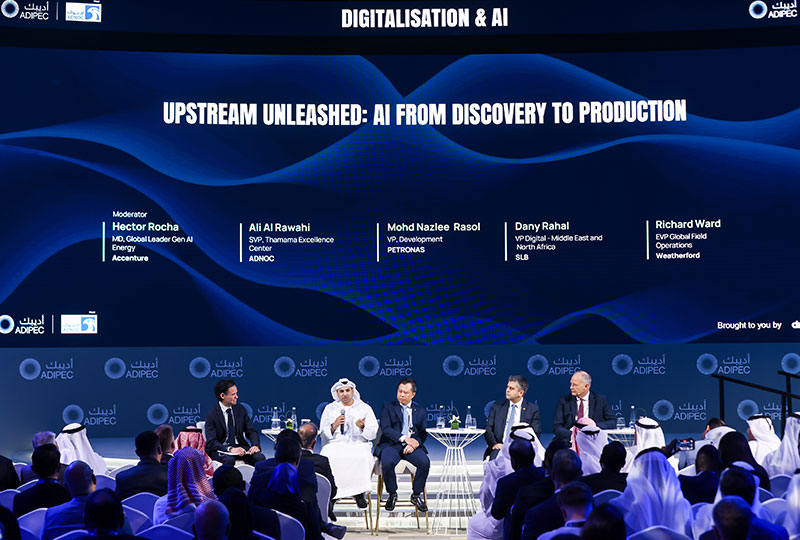
AI, Digital & Technology
Discover how AI and digital technologies are driving efficiency, resilience, security and competitive advantage across energy operations
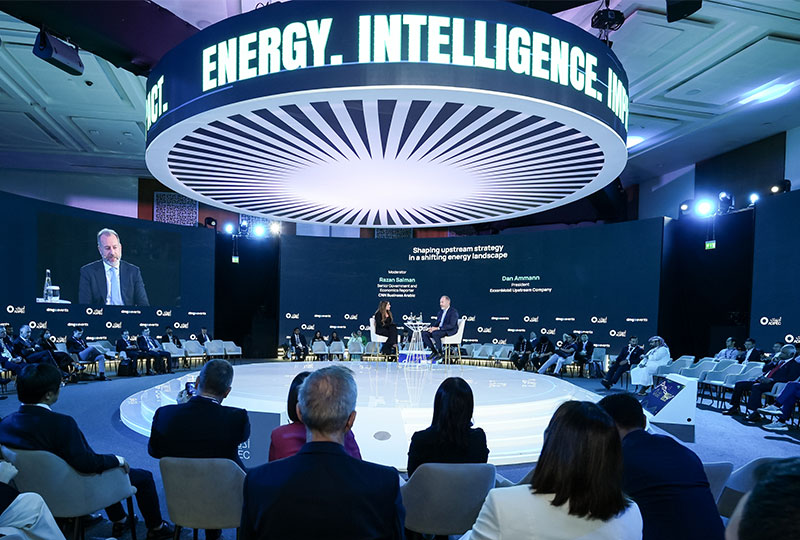
Upstream
Natural Gas & LNG
Delve into how natural gas and LNG markets are adjusting to shifting demand, new buyers and disrupted trade flows.
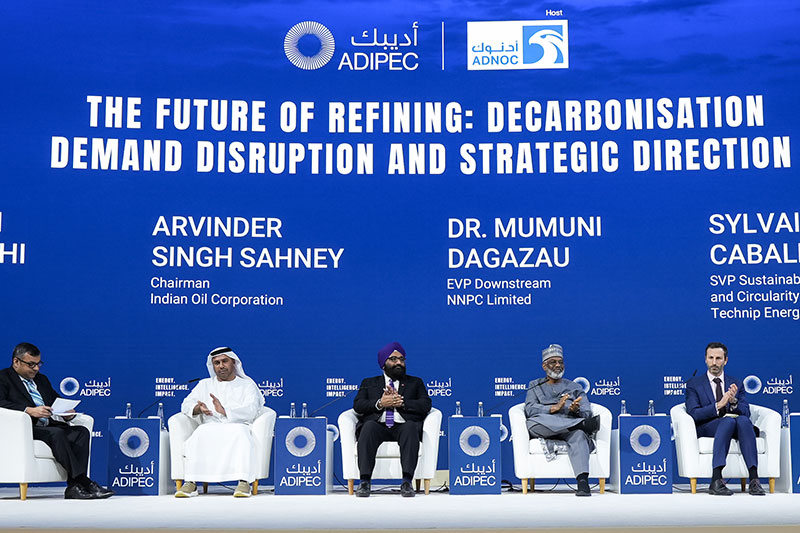
Downstream, Chemicals & Industrial Value Chains
Explore how downstream value chains are competing across markets, securing feedstocks and strengthening integration.
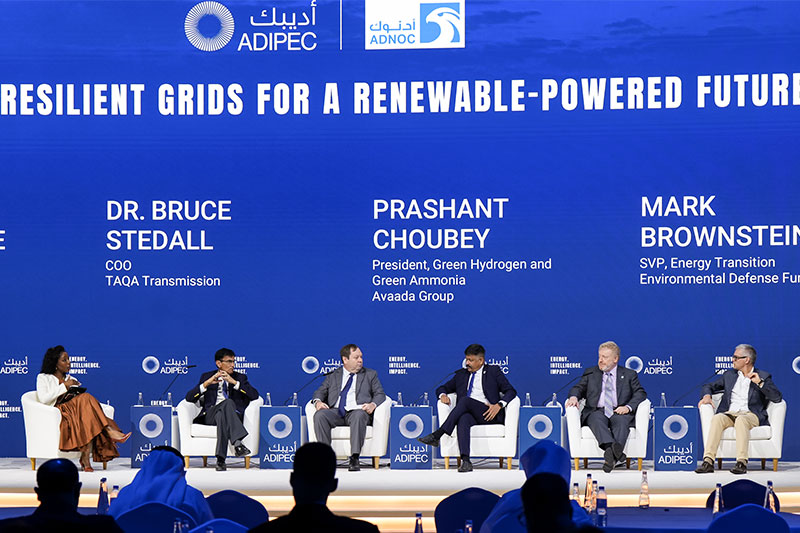
Grids, Infrastructure & Industrial Execution
Understand how grids, infrastructure and execution capacity are becoming decisive to growth, reliability and delivery at scale
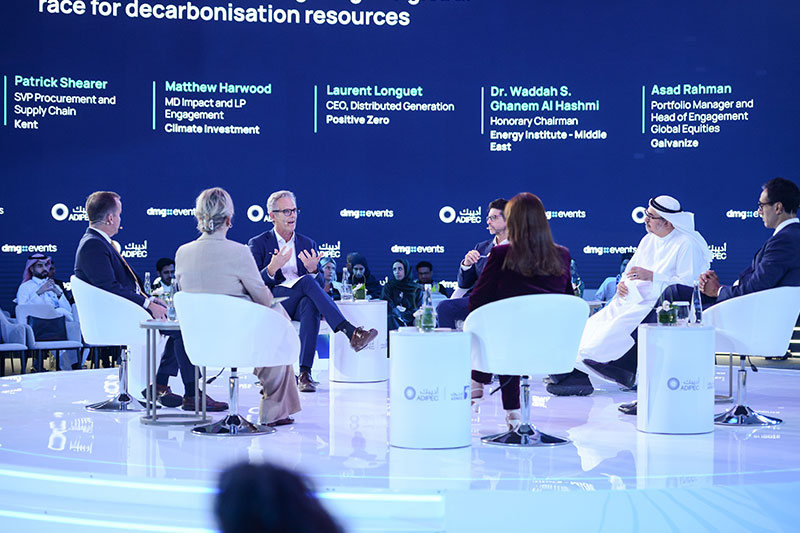
Clean Power, Molecules & Carbon Management
Explore how low-carbon power, cleaner molecules and carbon management are moving into commercially viable delivery at scale
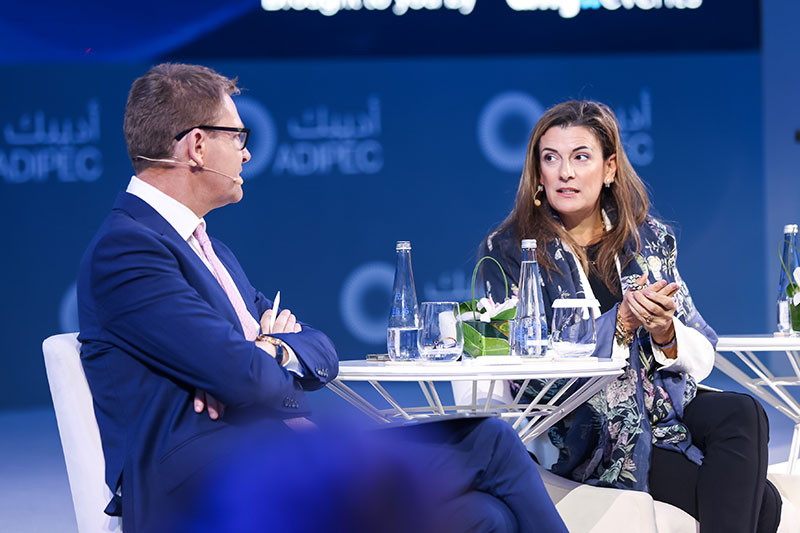
Maritime & Logistics
Discover how shipping, ports and logistics are strengthening trade resilience, route security and infrastructure competitiveness
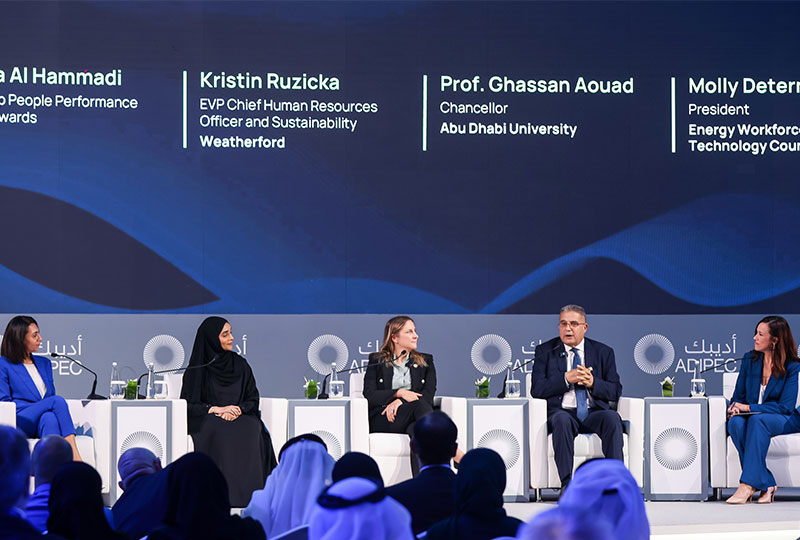
Workforce & Skills
Learn how energy leaders are tackling workforce constraints, critical skills gaps and leadership succession to sustain performance
Frequently asked questions
What is the focus of this programme?
It examines where clean electrons, nuclear, hydrogen, carbon capture and emerging molecules are commercially ready, where infrastructure and demand remain the binding constraints, and what separates the projects reaching investment decisions from those that will not, in a market reshaped by energy security concerns and successive supply shocks.
Who should attend?
Senior leaders from energy companies, project developers, utilities, off-takers, commodity traders, policymakers, industrial producers and investors involved in the financing, development or procurement of low-carbon power, hydrogen, carbon capture or clean molecules. The programme is designed for decision-makers evaluating where to allocate capital, secure offtake or position across emerging value chains.
What topics are covered?
Sessions span energy diversification as a security imperative, clean electron portfolio value and market design, nuclear deployment timelines, hydrogen project viability and early operational lessons, CCS economics and business models, clean molecule trade corridors and logistics, industrial decarbonisation and demand activation, manufacturing competitiveness and policy, carbon removal, and how companies invest and plan under sustained uncertainty.
Why is this programme important now?
Two major supply shocks in five years have reframed clean energy as an energy security priority, not just a climate one. At the same time, the sector is maturing: renewables face compressing margins, hydrogen is consolidating around a narrower set of viable projects, nuclear is rebuilding after decades of underinvestment, and CCS is beginning to demonstrate where the economics hold. The decisions being taken now on project selection, offtake, infrastructure and supply chain positioning will shape which companies and regions lead in the next decade.
What will attendees gain?
Practical insight into which clean energy projects and technologies are progressing and which are stalling, where commercial value is concentrating across emerging molecule value chains, how demand activation and border carbon measures are reshaping industrial investment, and how leading companies are structuring portfolios for resilience and returns in an environment where the rules continue to shift.
City host


Venue partner
Official local media partner

Official travel partner

Official broadcast partner
International Arabic news partner

Official English News partner

Official radio station

Arabic Business News partner

Official media partner
Technical Conference organiser
ADIPEC brought to you by