







Case Study
Building pathways for
greater adoption of
sustainable fuels in aviation

2.5%
Percentage share of aviation industry in global CO2 emissions
65%
Estimated reduction in emissions by airlines through the use of SAF by 2050
490,000
Number of flights that have now taken off using a mix of SAF and traditional fuels
50
Number of airlines that have some experience with SAF


cs7
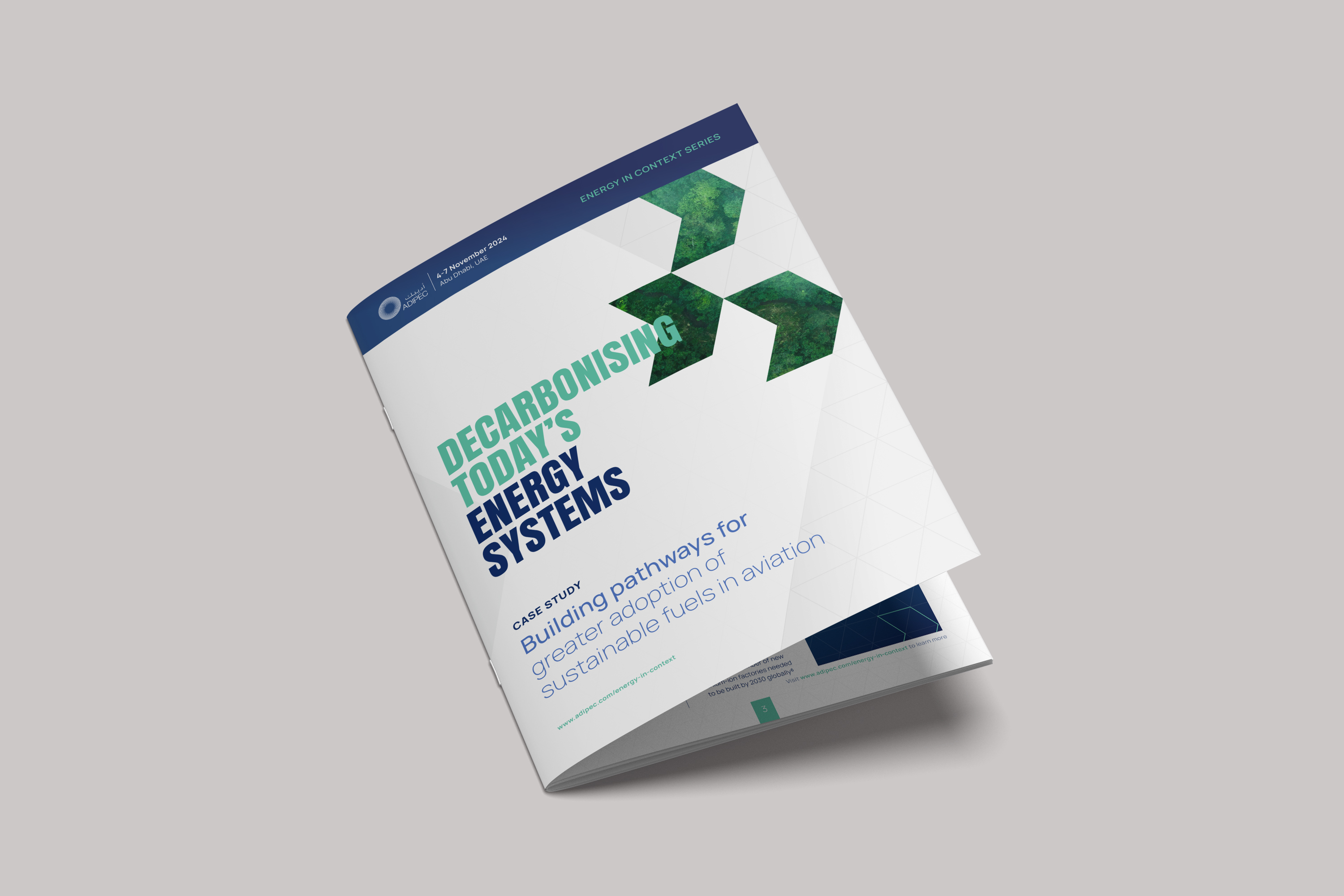
Case study summary
The aviation industry’s goal of achieving net-zero carbon emissions centres on maximising reductions at the source through sustainable aviation fuels (SAFs), cutting-edge propulsion technologies, and efficiency improvements such as enhanced air traffic management.
SAFs, which currently account for only 0.53% of aviation’s fuel need, can reduce CO2 emissions by up to 80%¹. They are produced from diverse feedstocks, including waste fats, oils, greases, municipal solid waste, agricultural and forestry residues, wet wastes, etc. SAFs can also be synthesised by capturing carbon directly from the air.
There’s strong market demand for SAFs, but supply remains a challenge. To address this, TotalEnergies and Masdar have launched a collaboration to produce green methanol and SAFs. The initiative is part of broader efforts to decarbonise high-emission industries such as aviation and maritime.
Organisations involved: ADNOC, bp, Emirates, Etihad Airways, IATA, Masdar, Tadweer, TotalEnergies
Download Case Study

Share ADIPEC's 'Energy in Context' with your LinkedIn network
- Click this link: www.adipec.com/sharecasestudy
- Log in to your LinkedIn account
- Edit the text and banner (optional)
- Publish the post
City host


Venue partner

Sport & recreation partner

Official local media partner

Official media partner

Technical Conference organiser

ADIPEC brought to you by