




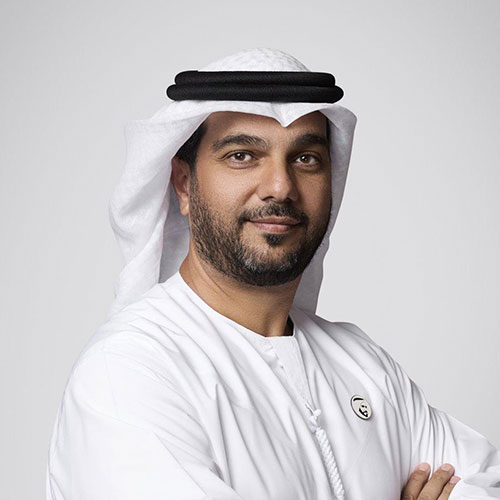
Hatim is a senior energy executive with more than 20 years of international experience spanning marine and offshore operations, drilling, HSE, business continuity, crisis management and operational resilience.
As Senior Vice President at ADNOC, he leads Group Upstream, and Personal Safety, Project & Contractor HSE and supports executive decision-making across complex operations and major projects, with a focus on protecting people, strengthening operational resilience and enabling safe, reliable performance.
Hatim began his career as a marine engineer aboard LNG carriers and oil tankers before progressing through increasingly senior operational, technical and leadership roles at ADNOC Drilling and ADNOC Offshore. His experience includes the acquisition, assurance and mobilization of offshore assets across Asia, as well as leadership responsibilities spanning drilling and offshore operations, asset integrity, process safety, emergency response and business continuity.
Throughout his career, Hatim has focused on connecting frontline operational experience with executive leadership, embedding risk and resilience into business decision-making and strengthening organizational readiness for complex and evolving challenges. He is also passionate about the role of technology, AI and robotics in transforming safety, reducing human exposure to risk and enabling safer, more resilient energy operations.
Hatim contributes to regional and international industry dialogue through the Society of Petroleum Engineers (SPE) and International Association of Drilling Contractors (IADC) and has participated in executive forums and industry conferences, bringing together operational, technical and leadership perspectives on the future of safety, resilience and energy.
His leadership philosophy is centered on a simple principle: put people first, prepare before challenges emerge, and build the resilience needed to deliver safe and reliable energy when it matters most.



