





Supported by

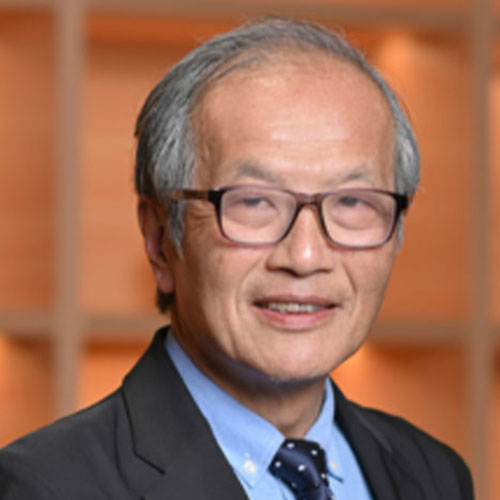
Prof. Jun Arima

Chief Sustainability Officer

JOGMEC

Jun
Jun

Jun Arima is Chief Sustainability Officer, Japan Organization of Metal and Energy Security (JOGMEC) and Visiting Professor, Graduate School of Public Policy, University of Tokyo. He also serves as, Consulting Fellow at the Research Institute of Economy, Economy, Trade and Industry (RIETI), Distinguished Senior Research Fellow at the Asia Pacific Institute of Research (APIR), and Senior Policy Fellow for Energy and Environment at the Economic Research Institute for ASEAN and East Asia (ERIA). He was a Lead Author of the Intergovernmental Panel of Climate Change (IPCC) 6th Assessment Report. His publication includes “Energy Policies of the IEA Countries” (2003-2006 editions), “Memoir of the Kyoto Protocol” (2014), “Truth of Global Warming Negotiation – Economic War on National Interests-“(2015), “Global Warming Countermeasures with Pragmatism – Paris Agreement and Thereafter” (2016), “Trump Risk – America First and Global Warming” (2017), “Policy Recommendations by the Quadripartite Commission on the Indian Ocean Regional Security” (Chapter 2) (2017), “Japan’s Energy Conundrum” (Chapter 11) (2018), “Finding a Viable Path for Reducing GHG Emissions2 (2019 King Abdullah Petroleum Studies and Research Center (KAPSARC), “Eco-fundamentalism as a Grist to China’s Mill” (2021), “Eco-fundamentalism will ruin our country” (2021), and “Eco-Fascism –Diseases calling for Decarbonization, Renewables and Nuclear Phase-out” (2022 Joint Authorship).

Session Overview
Tuesday, 3 November
11:50
Policy, Regulation & Governance Conference Room B 11:50 - 12:50
Energy sovereignty in an interconnected world: aligning national priorities, markets and global security

Energy sovereignty is now a core policy priority, but no country can fully insulate itself from global energy markets, technology systems, capital flows or supply chain shocks. The central question is not whether nations can eliminate dependency, but how they identify and manage the dependencies that matter most. Governments are reassessing exposure across fuels, minerals, processing capacity, grid equipment and digital systems, each with different security implications and mitigation costs. China holds around 80% of global solar manufacturing capacity and roughly 75% of battery production; 11 of the 20 minerals critical to the energy transition faced export controls at some point in 2025, demonstrating how dependencies can become instruments of geopolitical leverage. Europe's experience with Russian energy reinforces that resilience must be weighed against affordability and competitiveness. The countries that govern dependency with clarity, rather than react in crisis, will be better placed to protect energy security while remaining connected to global capital and innovation.

Attendee Insights:
Assess which policy approaches strengthen resilience against strategic dependencies without undermining competitiveness or market access.

Member of