





A global stage for 2,250+ exhibitors to showcase their
game-changing solutions and demonstrate tangible
actions advancing the energy transition.
Explore cutting-edge solutions, build valuable connections,
and stay ahead of the trends transforming global energy.
Across 13 conference programmes and 380+ sessions, speakers will share
diverse perspectives and discuss actionable outcomes aimed at
accelerating the transition to a cleaner, more secure energy future.
ADIPEC serves as a nexus, seamlessly
uniting international, regional, and
local stakeholders, from across industries.
Explore ADIPEC insights, announcements,
content and images of relevance
to members of the media.
For media enquiries email media@adipec.com
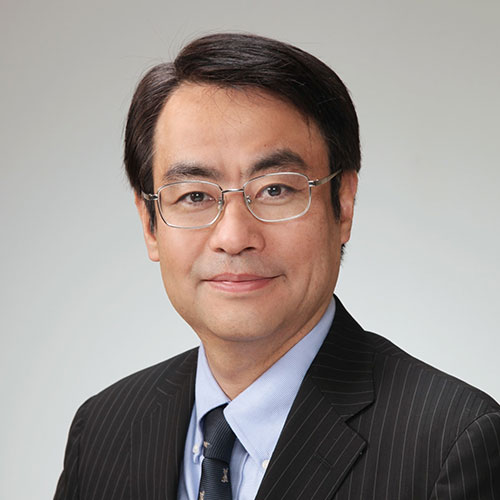
CEO
Japan Cooperation Center for Petroleum and Sustainable Energy (JCCP)
Prof. Haruhiko ANDO, CEO of JCCP and Consulting Fellow of RIETI, joined MITI in 1985. He was Director for H2FC Office and a founding member of IPHE (International Partnership for Hydrogen Economy), Directors of New and Renewable Energy Division and Recycling Promotion Division, and Deputy-DG for Trade policy. In Cabinet Secretariat/Office, Directors for Economic-Fiscal Management, for Science, Technology and Innovation, for IP Strategy, and Councillor for Indo-Pacific Economic Development. Also, he was Visiting Professor at Kyoto, Hitotsubashi and UEC. Awarded Cruz de Oficial from Spain.

Security of supply is not just about access to molecules or megawatts, but how systems perform under stress and recover from disruption. Events in 2026 showed that even short interruptions across corridors, grids or digital systems can disproportionate impact on prices, industry and public confidence. Spare capacity across global oil markets has tightened to around 3-4% of global demand, narrowing the buffer available to absorb shocks and increasing reliance on strategic reserves, fuel switching and system flexibility. The focus is shifting from prevention alone to operational preparedness. Strategic stocks, gas storage, reserve margins, interconnections, backup logistics and diversified energy sources form the resilience toolkit, but their effectiveness depends on real-time deployment. Operators are using AI-enabled tools to re-route flows, optimise dispatch, anticipate system stress and accelerate recovery decisions under pressure. Stress tests, scenario modelling and cross-sector crisis playbooks are becoming operational disciplines rather than contingency exercises. As volatility becomes structural, response speed and coordination are defining features of competitive and secure energy systems.
Attendee Insights:
Examine how governments and industry are turning resilience strategies into operational readiness and how diversified supply, system flexibility and advanced technologies can accelerate response and recovery under pressure.
dmg events is a global exhibitions and conferences organiser, with a portfolio of over 80 events focusing on diverse industries, from energy, construction and transport to design and hospitality. More than 425,000 visitors attend our events annually, creating opportunities to network, do business, overcome challenges and discover emerging industry opportunities.