





Under the patronage of His Highness Sheikh Mohamed bin Zayed Al Nahyan, President of the UAE, in his capacity as Ruler of Abu Dhabi

تحت رعاية صاحب السمو الشيخ محمد بن زايد آل نهيان ، رئيس الدولة "حفظه الله"، بصفته حاكماً لإمارة أبوظبي

Supported by

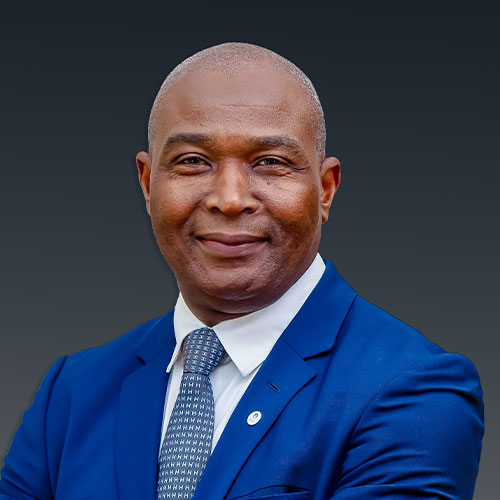
His Excellency Dr. Philip Mshelbila

Secretary General

Gas Exporting Countries Forum (GECF)

Philip
Philip

HE Dr Philip Mshelbila assumed office on 1 January 2026 as the fifth Secretary General of the Gas Exporting Countries Forum (GECF). Dr Mshelbila is a senior energy executive with over 30 years of experience, most of which covered the global natural gas / liquefied natural gas (LNG), and power sectors. His career spans executive management, board-level governance, strategic communications and stakeholder management, healthcare, sustainability, and large-scale project development. Prior to joining the GECF, he spent more than two decades with Shell, most recently serving as Managing Director and Chief Executive Officer of Nigeria LNG and previously as Chief Executive Officer of Atlantic LNG in Trinidad and Tobago. He has lived and worked across Africa, America, Europe and the Caribbean, and is now based in the Middle East. He holds an MB,BS from Ahmadu Bello University, a postgraduate qualification from the University of Aberdeen, and an Executive MBA from IESE Business School, Spain.

Session Overview
Tuesday, 3 November
13:25
Natural Gas & LNG Plenary Stage 13:25 - 13:55
Scaling LNG supply: absorbing 300 bcm of new capacity in a volatile market

Approximately 300 billion cubic meters (bcm) of new global LNG capacity is reaching the market between 2025 and 2030, reshaping trade flows, pricing structures and the balance of energy security. As liquefaction projects ramp up across the US, Middle East, Africa and other emerging supply hubs, the industry faces a central challenge: absorbing and managing unprecedented supply growth while responding to increasingly volatile and fragmented demand patterns. Demand is accelerating across South and Southeast Asia, driven by industrialisation, urbanisation, power generation and digital infrastructure. Whether oversupplied markets in the late 2020s collide with surging power demand, or align with it, will determine the commercial logic of the next investment cycle. As new projects compete for share and buyers seek greater flexibility and affordability, the key question is whether the next generation of LNG supply can deliver reliability, commercial resilience and geopolitical stability in an increasingly complex global system.

Attendee Insights:
Understand the evolving dynamics of LNG supply markets, how the new wave of projects is reshaping trade flows and what demand signals will determine the commercial case for the next round of investment.

Member of