





Supported by

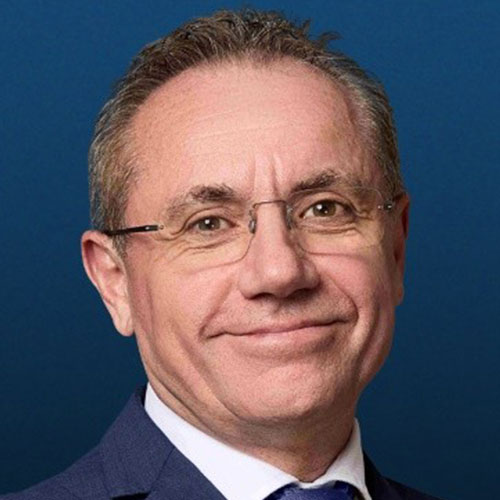
Dr. Michele Fiorentino

President, Energy Solutions

XRG

Michele
Michele

Dr. Michele Fiorentino is the President of XRG’s Energy Solutions division. He was previously the Executive Vice President of Low Carbon Solutions and Business Development at ADNOC's Low Carbon Solutions & International Growth directorate and previously served as the company’s Chief Investment officer. He was also the EVP of Strategy and M&A at Baker Hughes where he championed the company’s strategic agenda to become a leading technology company with a low-carbon offering. Dr. Fiorentino has over 25 years of experience in strategic business development in energy, manufacturing and chemicals. He is passionate about developing deep commercial relationships and creating a high-achieving, innovative and diverse culture. With a background in engineering and finance, Dr. Fiorentino is well positioned to lead energy solutions and to drive XRG’s strategic growth across energy infrastructure that connects the gas molecule to the customer. With expertise in developing and implementing strategies and a proven track record in managing a portfolio of international assets and partnerships, he is spearheading a platform that aims to maximize the value of XRG’s gas portfolio, reduce risk, and provide advantaged access for XRG’s molecules in key gas markets. He holds a Ph.D. in Chemical Engineering from the University of Naples in Italy and a master’s degree in finance from London Business School.

Session Overview
Wednesday, 4 November
12:40
Finance & Investment Plenary Hall A 12:40 - 13:20
Resilience as a strategy: building energy security into investment portfolios

Energy resilience has moved from an operational consideration to a strategic investment priority. As geopolitical shocks to concentrated supply routes continue to reshape the energy landscape, investor priorities are shifting from managing short-term price exposure to securing long-term supply continuity, forcing them to restructure how they assess risk and structure energy portfolios. Capital is already flowing toward infrastructure that strengthens supply security and reduces dependence on concentrated or vulnerable corridors. Investment appetite is strongest where assets offer supply security alongside competitive returns, spanning domestic production, LNG infrastructure, renewables and nuclear. From an investor point of view, the operators and developers that possess technological leadership and operational capacity on a global scale will be in high demand. The shift from optimisation to resilience as the organising principle of energy investment is redefining which assets attract capital, which operators are considered investable and which portfolios are positioned for the next decade.

Attendee Insights:
Explore how investors are reorienting portfolios from cost optimisation toward resilience and assess which asset classes and geographies are attracting capital.

Member of