





Supported by

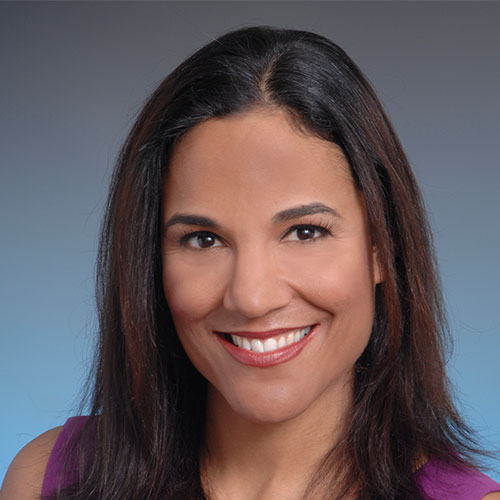
Dr. Helima Croft

MD, Head of Global Commodity Strategy and MENA Research Global Research

RBC Capital Markets, LLC

Croft
Croft

Helima is a Managing Director and the Head of Global Commodity Strategy and Middle East and North Africa (MENA) Research at RBC Capital Markets. She specializes in geopolitics and energy, leading a team of commodity strategists that cover energy, metals, and cross-commodity investor activity, as well as policy analysis and both Washington and global political insights. Helima is a CNBC contributor, a member of the channel’s exclusive family of experts. Helima is on the Board of Directors for the Atlantic Council, is a Life Member of the Council on Foreign Relations, and is on the Advisory Council for the Department of History at Princeton University. She is on the Board of Directors of Reservoir Media, Inc., the first female-founded and led publicly traded independent music company in the US. Helima joined RBC Capital Markets from Barclays, where she was a Managing Director and Head of North American Commodities Research. Prior to that, she worked in Lehman’s Business Intelligence Group, the Council on Foreign Relations, and the Central Intelligence Agency, where she focused on geopolitics and commodities. Helima has received many industry accolades throughout her career and received her PhD in economic history from Princeton in 2001.

Session Overview
Tuesday, 3 November
11:50
Policy, Regulation & Governance Conference Room B 11:50 - 12:50
Energy sovereignty in an interconnected world: aligning national priorities, markets and global security

Energy sovereignty is now a core policy priority, but no country can fully insulate itself from global energy markets, technology systems, capital flows or supply chain shocks. The central question is not whether nations can eliminate dependency, but how they identify and manage the dependencies that matter most. Governments are reassessing exposure across fuels, minerals, processing capacity, grid equipment and digital systems, each with different security implications and mitigation costs. China holds around 80% of global solar manufacturing capacity and roughly 75% of battery production; 11 of the 20 minerals critical to the energy transition faced export controls at some point in 2025, demonstrating how dependencies can become instruments of geopolitical leverage. Europe's experience with Russian energy reinforces that resilience must be weighed against affordability and competitiveness. The countries that govern dependency with clarity, rather than react in crisis, will be better placed to protect energy security while remaining connected to global capital and innovation.

Attendee Insights:
Assess which policy approaches strengthen resilience against strategic dependencies without undermining competitiveness or market access.

Member of