






Supported by

Ben Gaunt

SVP People, Culture, Upstream

bp

Ben
Ben

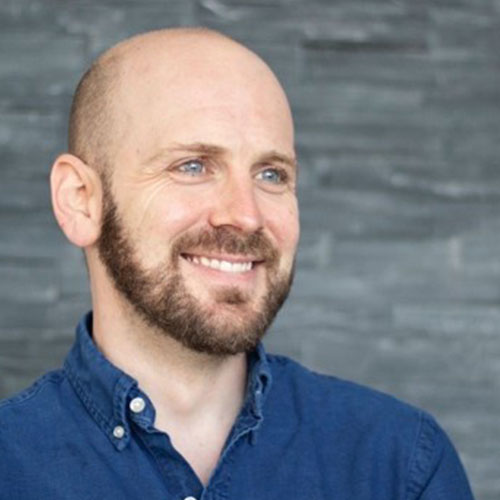
Ben Gaunt, Senior Vice President, People & Culture, Upstream, bp Business transformation leader specialising in organisational effectiveness, leadership and talent Ben Gaunt is Senior Vice President, People & Culture for bp’s Upstream business and a member of its leadership team. He partners with senior executives to shape the people strategy for one of the world’s largest and most geographically diverse energy businesses, supporting a global workforce operating across complex, high-hazard environments. With nearly two decades of international experience spanning consulting and industry, Ben specialises in organisational transformation, leadership, talent and culture. Prior to his current role, he led bp’s Group Transformation Office, coordinating enterprise-wide transformation across the company, and previously served as Senior Vice President, Talent and Chief Talent Officer, leading bp’s global talent agenda. Before joining bp in 2020, Ben spent eleven years at Accenture, where he was a Managing Director and Partner in the Strategy & Consulting practice. Ben is passionate about building high-performing organisations through trusted leadership, strong cultures and organisational effectiveness. He believes sustainable business performance comes from creating environments where people feel safe to speak up, contribute and perform at their best.

Session Overview
Wednesday, 4 November
16:00
Workforce & Skills Plenary Hall B 16:00 - 16:30
The capability constraint: closing the execution gap in a capital-intensive era

The global energy system is entering a capital-intensive expansion phase, with upstream growth, LNG capacity, grid reinforcement and carbon management scaling in parallel. The primary constraint is no longer capital availability but execution capability. Ageing technical populations, a narrowing craft pipeline and constrained cross-border mobility are creating a structural workforce gap that requires capable workforce systems that capital alone cannot close. This calls for systems that can sense demand, mobilise capability and redeploy skills dynamically. The challenge is acute in emerging markets and developing economies, where rapid training and scalable reskilling are essential. Increasingly, the gap is not only the availability of talent but the speed at which expertise can be deployed and redeployed as project demands shift. AI and workforce intelligence are improving visibility of execution risk at the task level, where bottlenecks and critical expertise converge. Treating workforce capacity as a dynamic system, rather than a static plan, shifts the sector from theoretical readiness to real-time mobilisation.

Attendee Insights:
Understand how workforce constraints impact timelines and capital efficiency, the interventions to close execution gaps, and how sovereign skills, EMDE pipelines, and dynamic mobilisation enable capability at scale.

Member of