



Under the patronage of His Highness Sheikh Mohamed bin Zayed Al Nahyan, President of the UAE, in his capacity as Ruler of Abu Dhabi

تحت رعاية صاحب السمو الشيخ محمد بن زايد آل نهيان ، رئيس الدولة "حفظه الله"، بصفته حاكماً لإمارة أبوظبي

Supported by

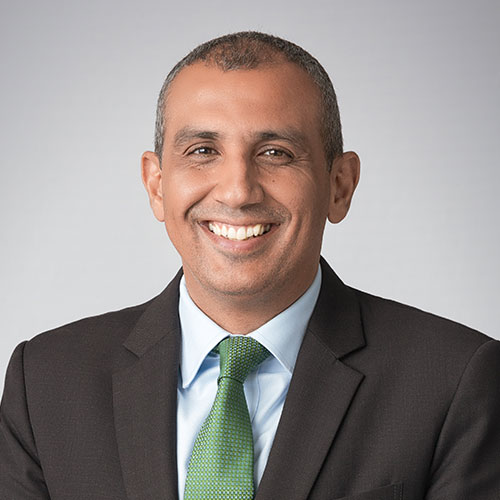
Ibrahim Al-Zu'bi

Group Chief Sustainability & ESG Officer​

ADNOC

Ibrahim
Ibrahim

Ibrahim N. Al Zu’bi oversees ADNOC’s sustainability strategy and performance and provides strategic direction for its environmental, social and governance (ESG) disclosures and reporting. Prior to joining ADNOC, Al Zu’bi served as Chief Sustainability Officer at Majid Al Futtaim Group where he led the efforts to achieve net positive performance across the Group’s operations and raised its sustainability impact and profile in the Middle East and globally. Al Zu’bi currently serves as Chairperson of the Global Council on UN SDG 13, Vice Chair of UN Global Compact Network, UAE and Chairman of the MENA CSO network. Additionally, he is a Senior Associate at the University of Cambridge Institute for Sustainability Leadership. Al Zu’bi is former Chairman and Vice Chairperson of the Corporate Advisory Board of the World Green Building Council and has served as a Fellow at the Posterity Institute, UK, and as West Asia Coordinator for the Youth Xchange Project of UNEP and UNESCO. He has held the role of UAE private sector representative at the Global Alliance for Buildings and Construction and was a member of the UAE’s Circular Economy Council, Emirates Green Building Council, World Economic Forum’s Global Future Council on Net-Zero Transition and the Private Sector Advisory Council for UN Sustainable Development Goals. He also served as Senior Advisor – Sustainability for the Dubai Land Department, Government of Dubai. Author of How to ‘Net’ Positive, a practical guide for companies embarking on their net positive journey, Al Zu’bi’s impactful leadership in sustainability has been recognized in the Top 100 Thought Leaders in Europe and the Middle East by the Center for Sustainability and Excellence, US. He has also been selected as the 35th sustainability leader among the global top 100, the only one from the UAE and Gulf region, by Sustainability Magazine. Al Zu’bi holds a Bachelor of Science degree in Civil Engineering from the Jordan University of Science and Technology.

Session Overview
Tuesday, 3 November
15:05
Clean Power, Molecules & Carbon Management Plenary Hall B 15:05 - 15:35
Methane action: the path to lower-intensity production

As scrutiny of energy supply intensifies, methane emissions and routine flaring are becoming important measures of operational quality and production performance. Producers investing in electrifying operations, eliminating routine flaring, reducing methane emissions and improving energy efficiency across their value chains are finding that lower-intensity barrels attract preferential offtake, better financing terms and stronger long-term partnerships. For NOCs and IOCs operating in a market where trust and operational track record are commanding a premium, carbon intensity is no longer a reporting exercise. It is becoming a factor in how long-term supply relationships, market access and financing terms are shaped.

Attendee Insights:
Explore how carbon intensity is shaping market access, financing and partnership decisions across the energy value chain, and what operational investments are delivering measurable competitive advantage.

15:25
Clean Power, Molecules & Carbon Management Plenary Hall B 15:25 - 15:55
Methane action: the path to lower-intensity production
As scrutiny of energy supply intensifies, methane emissions and routine flaring are becoming important measures of operational quality and production performance. Producers investing in electrifying operations, eliminating routine flaring, reducing methane emissions and improving energy efficiency across their value chains are finding that lower-intensity barrels attract preferential offtake, better financing terms and stronger long-term partnerships. For NOCs and IOCs operating in a market where trust and operational track record are commanding a premium, carbon intensity is no longer a reporting exercise. It is becoming a factor in how long-term supply relationships, market access and financing terms are shaped.
Attendee Insights:
Explore how carbon intensity is shaping market access, financing and partnership decisions across the energy value chain, and what operational investments are delivering measurable competitive advantage.

Member of