



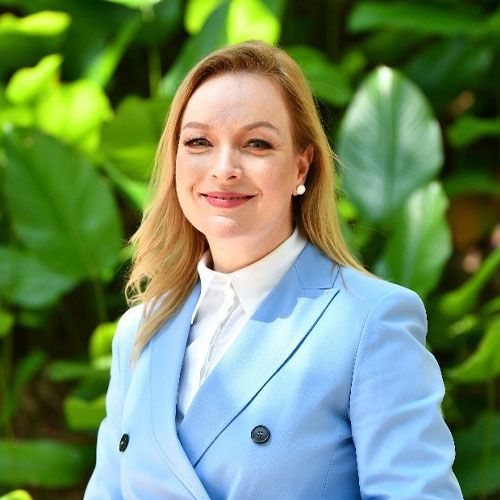
Charlotte Wolff-Bye is an award-winning international business leader and the Chief Sustainability Officer at PETRONAS, a Malaysian Fortune 500 company. Since joining in 2021, she has transformed PETRONAS's energy transition ambitions into actionable plans, driving decarbonization, nature action and social progress. Her work spans value chain and ecosystem development, new ventures and capability development to accelerate the sustainable energy transition. Previously, Charlotte was Vice President of Sustainability at Equinor, where she developed and implemented the company's first sustainability strategy, establishing low carbon as a core strategic priority. From 2007 to 2014, she served as General Manager of Corporate Responsibility at ArcelorMittal, bringing with her a diverse background in telecommunications, multilateral lending, music marketing, and diplomatic affairs. A prominent advocate for responsible business performance, Charlotte frequently speaks, comments, and writes on energy and sustainability matters. Over the years she has helped launch several partnerships, including the UNEP Climate and Clean Air Coalition Oil and Gas Methane Partnership and the Global E-sustainability Initiative and is currently representing PETRONAS in several international and multilateral initiatives. Charlotte has received Devex’s leadership award for her contribution to international development and is ranked among the world’s top 100 chief sustainability officers, placing within the top 5 in Asia. With her Nordic heritage and extensive international experience, Charlotte brings a unique perspective and unwavering commitment to fostering cooperation and collaboration in global business relations.



