





As energy demand rises, Asia will need greater investment, technology and partnerships to strengthen resilience and build future capacity.
Energy security has become one of Asia's defining economic challenges. With the International Energy Agency projecting that the Asia-Pacific region will account for around half of global energy demand growth through 2050, securing reliable and affordable energy is increasingly critical to sustaining economic growth, industrial competitiveness and long-term prosperity.
As industrial expansion, electrification, digitalisation and artificial intelligence (AI) accelerate demand, governments and businesses face a dual imperative: meet today's energy requirements while mobilising the capital needed to build the infrastructure, technology and workforce capabilities that will support tomorrow’s growth.
Asia’s growing economic weight also means that decisions being made across the region will have consequences far beyond its own markets, influencing global investment flows, technology deployment and the development of future energy infrastructure.
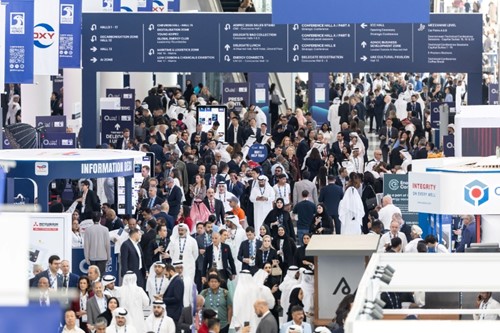 Meeting these challenges will require more than additional energy supply. It will depend on the ability to finance, build and connect new capacity at unprecedented scale. Those priorities will be central to ADIPEC 2026, taking place in Abu Dhabi, United Arab Emirates, from 2-5 November.
Bringing together policymakers, energy producers, technology leaders, financiers and investors, ADIPEC serves as a platform to mobilise capital, accelerate technology adoption, build more resilient supply chains and forge the partnerships needed to strengthen energy security and build the capacity required for future growth.
Bringing together policymakers, energy producers, technology leaders, financiers and investors, ADIPEC serves as a platform to mobilise capital, accelerate technology adoption, strengthen supply chains and forge the partnerships needed to strengthen energy security and build the capacity required for future growth.
For Asian participants, the event provides direct access to the investment, expertise and commercial relationships required to meet rising energy demand, strengthen resilience and support long-term progress. Drawing on the UAE's position as a reliable energy supplier, long-term investment partner and global hub for technology and industry, ADIPEC has become one of the world's leading venues for translating strategic priorities into commercial agreements, investment decisions and tangible action.
A platform focused on execution
As energy security, industrial competitiveness, digitalisation and infrastructure development become increasingly interconnected, the industry is moving from alignment around priorities towards the harder challenge of delivering projects at scale.
ADIPEC therefore focuses on the practical requirements of delivery: financing projects, deploying technology, strengthening supply chains and creating the commercial frameworks needed to move infrastructure from planning to operation.
For Asian organizations, this practical orientation is particularly relevant. Across the region, companies are seeking ways to meet growing demand while improving efficiency, integrating artificial intelligence, managing more complex infrastructure requirements and securing access to long-term investment.
The event’s scale also creates a unique environment for collaboration. With participants from more than 170 countries, ADIPEC brings together decision-makers across government, finance, technology and industry.
Programmes addressing the priorities shaping Asia’s energy future
Reflecting Asia’s growing influence, ADIPEC 2026 will feature strong participation from senior leaders at INPEX, JERA, PETRONAS, ONGC Videsh, ZhenHua Oil and Essar Group, among others.
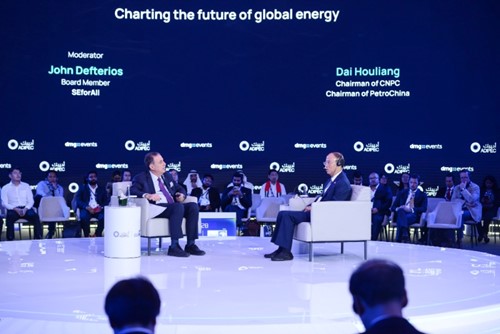 As Christopher Hudson, President of dmg events, the organisers of ADIPEC, explains: “Asia’s influence on the global energy system now extends far beyond demand. The region is increasingly shaping technology, manufacturing, infrastructure and the commercial relationships behind the industry’s next phase of growth.
“ADIPEC has always evolved with the industry, responding each year to where the biggest shifts are happening and where the greatest opportunities lie. Our role is to create the platform where those changes can be translated into decisions, partnerships and progress.”
That shift is reflected across the conference agenda.
Several ADIPEC Strategic Conference programmes will be particularly relevant to Asian stakeholders. The Natural Gas & LNG programme will bring producers, buyers and infrastructure developers together to examine how supply can be expanded and diversified for import-dependent Asian markets, from contracting and market access through to the shipping and regasification capacity needed to maintain flexibility.
The Grids, Infrastructure & Industrial Execution programme will address the generation, transmission, storage and infrastructure capacity required to support Asia’s industrial, urban and digital growth, while the Finance & Investment programme will look at how capital can be mobilised for the region’s expanding infrastructure pipeline, including risk allocation, financing models and commercial structures that move projects from concept to delivery.
The Maritime & Logistics programme will focus on the ports, fleets and shipping routes connecting global energy producers with Asian buyers, and the alliances needed to maintain supply chain reliability as volumes grow.
Meanwhile, the AI, Digital & Technology Innovation programme will examine how artificial intelligence, automation and advanced analytics are being embedded into energy systems to sharpen performance and decision-making, alongside the increasing power requirements created by Asia’s rapidly expanding data-centre and digital economy.
New Leadership Dialogues will bring these themes directly into the boardroom, including a session on ‘Asia’s power squeeze: integrating renewables and gas in high-growth power systems’ and a Boardroom Roundtable on ‘The new technology frontier: Asia’s role in shaping global innovation’.
Beyond the energy sector
Energy may be the catalyst, but many of the organisations shaping the industry's future sit beyond the traditional boundaries of the sector.
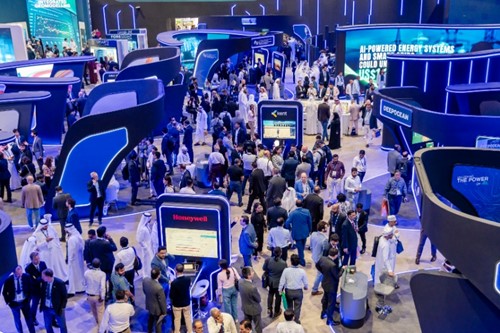 Technology companies are confronting the rapidly growing power requirements of AI and data centres. Manufacturers need reliable and competitive energy to expand production. Financial institutions are determining which large-scale infrastructure projects can secure capital. Logistics companies depend on resilient energy and transport networks to maintain global trade flows.
As these sectors become more interconnected, energy is increasingly a boardroom issue far beyond the traditional energy industry.
ADIPEC brings these increasingly interdependent sectors into one platform, enabling energy producers, technology companies, manufacturers, financiers and logistics providers to align around shared infrastructure, investment and delivery needs.
Strengthening Asia-Middle East partnerships
The relationship between Asia and the Middle East is also evolving beyond the traditional producer-customer model.
Asian economies continue to rely on the Middle East for energy security, while opportunities for collaboration are broadening across infrastructure, technology, manufacturing, industrial development and investment.
ADIPEC provides a venue where those relationships can deepen further, bringing together organisations pursuing projects and partnerships in both regions, whether through project development, technology deployment, capital investment or market expansion.
Sustaining Asia's next phase of growth will depend not only on access to energy, but on the resilience, intelligence and scale of the systems supporting it. As Asian and Middle Eastern markets deepen their ties across energy, technology, infrastructure and investment, those relationships will become increasingly important to strengthening energy security, competitiveness and long-term economic growth.
Learn more at www.adipec.com/nikkeiasia



