





The UAE’s decision to leave OPEC and OPEC+ reflects the need for greater flexibility in a world where demand is evolving, supply routes face increasing vulnerabilities and energy systems must respond more rapidly to changing conditions
Energy markets have entered an era in which disruption in one region can rapidly cascade across global supply chains, industrial systems and national economies.
Recent pressures on critical maritime routes have demonstrated how quickly local instability can become a global economic concern. Energy security is no longer defined only by what a country can produce or source. It is also about whether energy can move reliably through infrastructure, trade routes, logistics systems and partnerships that connect producers with markets.
 In this environment, stability matters. It underpins economic resilience. But stability is not simply about maintaining supply in the short term. It is about something broader and more enduring: stewardship of the global energy system.
For decades, the UAE has invested in the capabilities that enable energy systems to perform under pressure: production capacity, strategic infrastructure, diversified export routes, storage, logistics, trading capability and long-term international partnerships.
UAE’s broader energy responsibility
The UAE’s decision to leave OPEC and OPEC+ should be viewed through this lens. It reflects the need for greater flexibility in a world where demand is evolving, supply routes face increasing vulnerabilities and energy systems must respond more rapidly to changing conditions. It does not diminish the importance of cooperation or market stability; rather, it adapts the UAE’s role to a more complex global energy landscape.
The UAE is not stepping back from global energy responsibility. It is adapting its role to a more volatile system, with greater flexibility at home and stronger cooperation internationally.
Abu Dhabi’s relevance in this moment is clear. As a major producer with the capacity, infrastructure, capital and industrial capability to deliver energy reliably at scale, it remains one of the world’s most competitive and dependable energy suppliers.
Its role extends beyond production. Abu Dhabi connects resources with markets, investment with delivery, and technology with industrial applications. As geopolitical pressures reshape trade routes, investment decisions and energy security priorities, this combination of capability and credibility matters. The world needs suppliers that can respond to disruption, invest ahead of demand and remain committed to long-term stability. Abu Dhabi is positioned to do all three.
Responsible energy leadership cannot be defined solely by production or short-term market management. It must also be measured by the ability to strengthen resilience, diversify supply options and remain a dependable partner during disruption.
This is the broader form of stewardship the UAE is pursuing.
Through ADNOC, the UAE continues to strengthen production, logistics and trading capabilities. Through Masdar, it is expanding renewable energy investments internationally. Across government and industry, it is investing in digital infrastructure, artificial intelligence and advanced energy technologies that improve efficiency, responsiveness and reliability.
At the same time, the UAE is expanding its role across oil, gas, LNG, renewable energy and lower-carbon solutions, recognising that resilient energy systems require diversity. Together, these investments form an integrated approach to energy security designed to support reliable supply today while strengthening resilience for the future.
Yet stewardship is not something any one country can deliver alone.
The risks facing energy systems rarely respect national borders. A disruption to a shipping route can affect refinery economics, industrial production, power systems, food prices and inflation thousands of miles away.
The answer cannot be fragmentation. It must be greater cooperation between producers and consumers, stronger alignment between governments, investors and industry, and practical partnerships that connect supply, infrastructure, finance, technology and demand.
Abu Dhabi brings partners together
Coming together is not a diplomatic ideal; it is an operational necessity.
This is where convening power matters. Abu Dhabi’s role is not only to supply energy, but also to help create the conditions for collective action.
ADIPEC is a practical expression of that role. It brings together governments, energy producers, investors, technology leaders and industrial players at a time when the industry must work together to secure supply, modernise infrastructure, mobilise capital and deploy innovation at scale.
At ADIPEC 2026, the focus must be on outcomes: the partnerships, investments and delivery models that can strengthen energy systems under real-world pressure and position them for long-term growth.
In a fragmented world, Abu Dhabi provides a platform where common challenges can be addressed through practical collaboration.
As the challenges facing the sector continue to evolve, so too must our response. Stability remains essential, but it is no longer sufficient on its own. Energy systems must become more integrated, innovative and resilient by design.
The UAE’s commitment is clear. We will continue to be a reliable supplier of energy, investing in the infrastructure, technologies and partnerships that strengthen resilience and support long-term growth.
Modern energy leadership, however, extends beyond supply. It requires countries with the capability to deliver energy to also help create the conditions for stability, cooperation and progress across the wider system.
That is the role Abu Dhabi will continue to play: as a reliable energy partner and as a place where the global energy community can turn shared challenges into practical action. In an era of disruption, energy stewardship is no longer optional—it is a defining responsibility of modern energy leadership.
___________
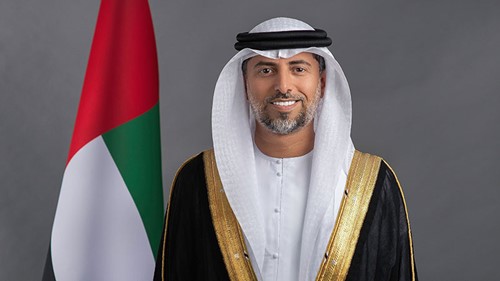
H.E. Suhail Mohamed Al Mazrouei is UAE Minister of Energy and Infrastructure
Source: Arabian Business



