








A global stage for 2,250+ exhibitors to showcase their
game-changing solutions and demonstrate tangible
actions advancing the energy transition.
Across 12 conference programmes and 380+ sessions, speakers will share
diverse perspectives and discuss actionable outcomes aimed at
accelerating the transition to a cleaner, more secure energy future.
Explore ADIPEC insights, announcements,
content and images of relevance
to members of the media.
For media enquiries email media@adipec.com
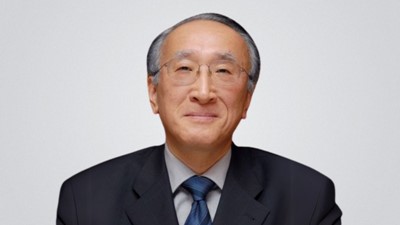
Authored by:
Escalating conflict in the Middle East has brought shipping through the Strait of Hormuz to a halt, with implications far beyond the region. Nobuo Tanaka, Executive Director Emeritus of the International Energy Agency, examines past oil shocks, the risk of supply disruption and inflationary pressure, and the tools available to manage market upheaval. He also considers what an Iran war means for Asia’s energy security and how the region may respond.

Asian countries are heavily dependent on Middle East oil and gas for economic growth, so certainly we are going to be impacted the most – especially China and India. At the same time, 90% of oil for Japan is also coming through the Strait of Hormuz. Gas is relatively fine, because about 10% of Japan’s gas is through Hormuz. So, the gas side is diversified in its sources.
I joined METI (Japan’s Ministry of Economy, Trade and Industry) in 1973, when we had the first oil shock. And in 1979 was the second oil shock. And then when I joined the International Energy Agency as Executive Director in 2011, the oil price hit $147 per barrel, a historical high. I remember that March 30 was my birthday, and the Hormuz Strait was blocked on that day. So I felt my destiny was that I can never get out of the energy supply crisis. I’m concerned that the third oil shock may happen in due course.
If the current situation is not going to be prolonged, we don’t see much problem. But we still have to prepare for the serious impact of supply disruption. Are we prepared for this? This is a very serious and important question we have to ask ourselves.
At this moment, the IEA is very much under serious discussion about how they could use the strategic stockpile. This kind of situation is in a way a nightmare scenario because closure of the Strait of Hormuz means the supply gap is much more than the capacity of the release of the stockpile by the IEA.
Even if we release stocks, it may not necessarily calm down the oil market as such. But the IEA is definitely calculating the possible impact and watching carefully how long the situation continues, and looking for the opportunities or timings of the strategic stockpile release.
The IEA can do that for the oil market, but not for the gas market. The IEA doesn’t have any kind of stockpile, policy or obligation, so the gas market links more to the electricity market or necessary database.
With gas playing a substantial role for electricity generation, we see a rush for LNG. Since Russian pipeline gas is reduced by the sanctions and cannot play a substitution role, a rush to LNG may happen. Already the gas price is moving higher, and the gas demand and supply situation in the market is worrisome.
Madame Takaichi, the new Prime Minister of Japan, is very much concerned about the economic security of Japan. The Japanese government should play a role, to contribute resources to increase security in sensitive technologies as well as energy related matters.
So she’s ready to take action on the energy security side, but the Japanese government’s way is thinking is for the long term – how we can prepare for the future? Restarting nuclear power, or using more renewables, more batteries, those kind of policy measures are there, and she is putting much strength into that direction of investing, into these new technologies.
But in the shorter term, the story is different. How can we prepare for a possible supply shortage? I remember in 1973, the first oil shock created panic among the people. Controlling this attitude is a really tricky and challenging issue for the new Prime Minister, although Japan has enough stocks – around 250 days of oil stocks and has prepared enough for restarting nuclear power plants.
International collaboration is really important. Collaboration in safety or in new design or evolution innovation, this is very important.
I am particularly interested in the collaboration of Japan and Korea with the United States, because Japan and Korea do not have any fossil fuel resources. So nuclear energy is really important for our energy security, and we have certain experiences in using nuclear power.
If Japan and Korea can work with US technology, we can make a sustainable model of nuclear power. That is what I’m promoting. It is called the Integral Fast Reactor, the processing technology deployed by the Idaho National Laboratory in the US. This technology can reduce the toxicity of radioactive waste from 300,000 years to 300 years – which is much more easy to manage.
This technology can be applied to the debris of Fukushima…which cannot be sent out of the prefecture. This trilateral collaboration (Korea, Japan and the US) may show the very sustainable future of nuclear technology.


dmg events is a global exhibitions and conferences organiser, with a portfolio of over 80 events focusing on diverse industries, from energy, construction and transport to design and hospitality. More than 425,000 visitors attend our events annually, creating opportunities to network, do business, overcome challenges and discover emerging industry opportunities.
Member of